Acoustics 101 — From the Bri-Tech Design Team - Sound Isolation vs. Room Acoustics — The Two Worlds of Theater Design
The Story of a Family, a Dream Theater, and the Science That Makes It All Work (this summary story is based on real clients projects, names changed - all pictures are our actual work)

When the Callahans first walked into the Bri-Tech design studio, they already had the dream: A performance-grade Immersa home cinema with seating for twelve, reference-level picture quality, and sound that would make Sunday football feel like the Super Bowl and late-night movies feel like their own private screening room.
But they also had one very real, very understandable request:
“We want amazing sound. We just don’t want to hear it everywhere in the house.”
And that’s where Acoustics 101 — From the Bri-Tech Design Team.
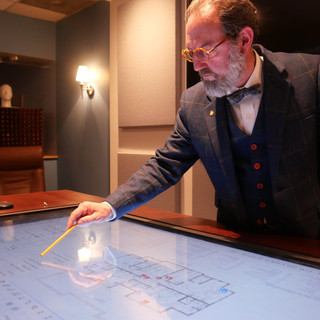
What most homeowners don’t realize is that a great home cinema isn’t just speakers and a projector—it’s physics, geometry, and a whole lot of movie magic behind the scenes. So we invited the Callahans into the design room, pulled up the plans on our design deck, and started with the most important question we ask in every Immersa project:

Sound Isolation vs. Room Acoustics — The Two Worlds of Theater Design
Imagine two parallel universes—like Back to the Future Part II—both happening inside the same room.
Universe 1: Sound Isolation
This is the part of the design people rarely think about, but always care about once the theater is built.
Sound isolation = keeping sound in, and other noise out.
Isolation is about construction, not equipment:
Staggered or double-stud walls
Isolation clips and hat channel
Mass-loaded drywall
Acoustic caulk and sealing
Floating floors or decoupled platforms
Sealed, baffled, quiet HVAC
Solid-core QuietDoors (yes, the Bri-Tech kind)
This is the realm where we battle bass traveling through framing, voices leaking into hallways, and subwoofers rattling the baby’s room at 11 pm.
The Callahans’ goal was simple: “Big sound, small footprint outside the room.” That required modeling the wall assemblies, identifying vibration paths, and designing a room that behaves like a container, not a megaphone.

Universe 2: Room Acoustics
Now we step into the fun universe—think Tron Legacy meets Top Gun: Maverick.
acoustics is about what happens to the sound once it’s inside the theater.
This is where we define:
Dialogue clarity
Bass smoothness and impact
Seat-to-seat consistency
Immersion and precision
The “wow” factor during that first scene
Room acoustics involves:
Low-frequency control (bass traps, modal analysis)
First-reflection absorption
Diffusion for spaciousness
Correct speaker placement and angles
Time alignment and delay tuning
Fabric walls to conceal treatment
Selecting materials that work with the system, not against it
If sound isolation keeps the outside world out, room acoustics shapes the sonic experience inside.
The Callahans wanted a true performance room—one where every seat was the “good seat.”That meant precise speaker modeling, subwoofer array calculations, and designing acoustic treatments that follow the physics of the space rather than “rules of thumb.”

Chapter 2: The Complexity Behind a Great Theater (And Why It Matters)
During design, we showed the Callahans how much math goes into their room. Their eyes widened—not worried… impressed.
Best Practices We Applied to Their Immersa Cinema
1. Start with the room, not the gear The shape, size, and materials of a room determine 60–70% of performance. Speaker selection comes after understanding the environment.
2. Optimize seating geometry Twelve seats means at least two rows—sometimes three. Each row affects:
Sightlines
Sound arrival times
Acoustic reflections
Bass response
We modeled the angles just like commercial screening rooms do.
3. Use multiple subwoofers (strategically placed)Bass is the hardest thing to control. Two subs may help. Four subs may solve it. Placement—and phase alignment—is everything.
4. Treat the room invisibly The Callahans didn’t want a tech lab. So we designed treatments behind stretched fabric walls, keeping the room beautiful while the acoustics quietly did their job.
5. Don’t forget the HVAC Big sound systems move air. HVAC systems move air. One must not ruin the other. Quiet airflow = no masking of dialogue or ruining the emotional moments.
6. Calibrate with real measurement tools “Sounds good to me” is not calibration. We use:
Acoustic analyzers
Time-alignment software
Modal mapping
Target curves
That’s how Marvel movies get that crisp dialogue and explosive impact simultaneously—and how the Callahans got the same feeling at home.
Chapter 3: The Reveal — When the Math Becomes Magic
Months later, the Callahans walked into their finished Immersa Cinema for the first time.
We cued up “Top Gun: Maverick.” on their movie server. The room disappeared. The jet engines rolled, the dialogue snapped into focus, and every seat—front to back—felt perfectly tuned.
Then we stepped into the hallway.
Quiet.
No rumble. No shouting through walls. Just the subtle hush of a home where the theater is exactly where it belongs—in the theater.
Conclusion: Build It Right, and It Becomes Part of the Home’s Legacy
Great home theaters don’t happen by accident. They happen when builders, designers, and engineers treat acoustics and isolation with the same seriousness as architecture and lighting.
For homeowners who want:
A real cinema experience
A space designed for family, gatherings, game nights, and late-night movies
A room that adds value to the home
And performance that lasts decades
It’s important to work with a firm that does the math, not an AV installer who “just puts speakers in a room.”
A true Immersa Cinema is engineered—precise, modeled, calculated, and crafted.
And when all the pieces come together? It feels like stepping into your own personal Hollywood.