Should You Hire a Technology Design Consultant?

(And Why Not Having Expert Design Can Cost You More Than the System Itself)
If you’re planning a smart home, conference room, classroom, theater, or facility-wide technology upgrade, one of the most important decisions you’ll make happens before any equipment is selected:
Who should design the system?
Many projects fail not because of bad products — but because the system was never properly designed in the first place.
Let’s break down the roles, the risks, and how to choose the right partner.
The Most Common (and Costly) Mistake
Hiring an installer instead of a system designer
In the technology world, these two roles are often confused — and that confusion leads to unreliable systems, budget overruns, and constant service calls.
An installer typically:
Focuses on mounting equipment and pulling wire
Uses familiar “go-to” products
Designs while installing
Optimizes for speed, not outcomes
A system designer or consultant:
Starts with goals, use-cases, and performance requirements
Engineers the system before equipment is purchased
Models audio, video, lighting, and control behavior
Designs for reliability, scalability, and long-term support
If the person designing your system is also figuring it out on site — you’re already behind.
What a True Technology Design Consultant Does
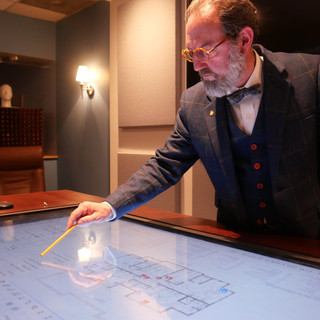
A qualified system designer or AV consultant treats technology the same way an architect treats a building or an engineer treats a bridge.
A proper design process includes:
Needs analysis & stakeholder interviews
Functional narratives (how the system is actually used)
Acoustic modeling and sightline studies
Network and infrastructure planning
Control logic and user-experience design
Power, cooling, and serviceability planning
Future expansion and lifecycle planning
This work happens before brands, models, or pricing are finalized.
Should I Hire a Technology Design Consultant Consultant, Engineer, or Integrator?
The best answer is often a design-led integrator — a firm that combines consulting, engineering, and integration under one roof without skipping the design phase.
Your options:
Independent consultant
Strong design, no installation
Requires a separate integrator later
Installer-only company
Fast and inexpensive upfront
Higher long-term risk
Design-build technology firm (best fit for most projects)
One accountable team
Engineering-first approach
Design, install, commission, and support
The key is not the business model — it’s whether real design and engineering actually happen.
Why Design Matters More Than the Brand Names
High-end technology systems fail every day using “top-tier” equipment.
Why?
Because:
Speakers weren’t modeled or delayed correctly
Displays were the wrong size or brightness
Control systems were over- or under-engineered
Networks weren’t designed for AV traffic
Service access was never considered
Good design ensures that the system works as a system, not just a collection of parts.
Red Flags When Choosing a Designer or Integrator
Be cautious if you hear:
“We’ve done this before — trust us” (without showing calculations)
“Design is included” (but no drawings or documentation exist)
“This is what we always use”
“You don’t need commissioning or tuning”
“We’ll fix it after install”
Professional designers prove performance before installation — they don’t guess.
Who Should Be Involved Early?
The best results come when the technology designer collaborates with:
Architects
Builders / construction managers
Interior designers
IT teams
Facilities or operations staff
Technology is no longer an afterthought — it’s infrastructure.
The Bottom Line
If your system needs to:
Work every time
Be easy to use
Scale in the future
Support critical functions
Protect your investment
Then the most important hire is the person or firm designing the system — not the one selling the equipment.
How Bri-Tech Approaches System Design
At Bri-Tech, we operate as a technology design and integration firm — not just an installer.
We invest heavily in research, visiting manufactures all over the world to see first hand how the products are made and perform.
We design, test, and refine the same systems we deploy:
Smart homes and private cinemas
Conference rooms and studios
Schools and immersive classrooms
Performance spaces and video walls
Every project begins with engineering, documentation, and intent — because great systems don’t happen by accident.
Thinking about a project?
If you’re evaluating options or just want to understand what a properly designed system looks like, start with the design conversation first.
That decision will shape everything that follows.