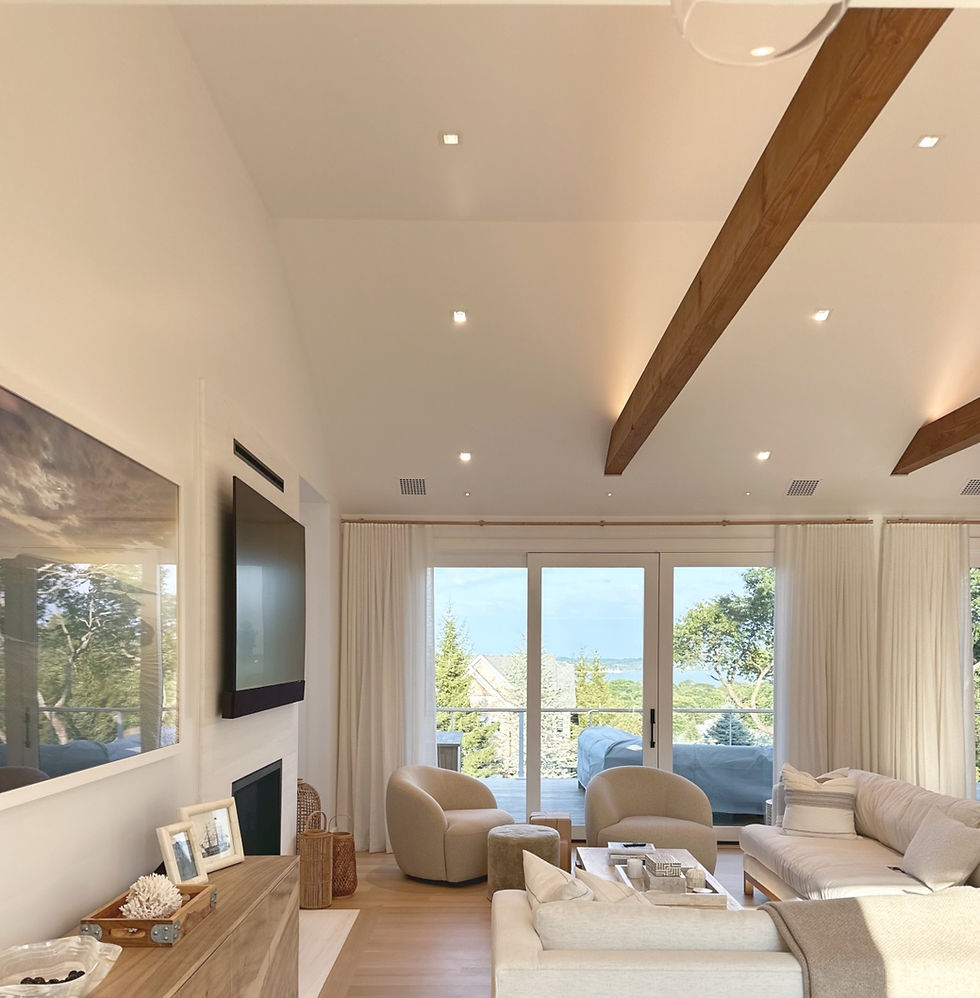
Technology Should Be Designed. Not Left to Chance.
Updated: Sep 8

You wouldn't build a home or commercial building without architectural plans. So why are critical technology systems so often figured out after construction has already started?
Today, technology is part of the infrastructure of almost every building.
Networks. Wi-Fi. Security. Audio and video. Lighting and lighting control. Communications. Access control. Conference systems. Automation. Shades. Surveillance. Entertainment. Life-safety interfaces.
Yet on many projects, these systems receive surprisingly little attention during the design phase.
The architect designs the building. The electrical engineer designs the electrical infrastructure. The mechanical engineer designs HVAC. The lighting may be partially addressed by several different parties.
Then technology is left for later and design to the bidders. That's when problems start.
The Cost of Designing Technology in the Field
When technology isn't properly designed before construction, decisions get made by individual contractors as the project progresses.
The electrician puts an outlet where they think the display will go. The security contractor determines camera locations. The AV company decides where equipment should live. The network gets designed after walls are already framed. Lighting controls are selected without fully considering shades, automation or how the spaces will actually be used.
Each contractor may do their part correctly.
The problem is that nobody designed the complete technology environment.
That can lead to:
Poor Wi-Fi coverage
Visible wires and poorly located devices
Displays mounted at the wrong height
Inadequate conduit and pathways
Missing power and data locations
Oversized or poorly located equipment racks
Cameras with blind spots
Inadequate network infrastructure
Poor lighting and glare
Lighting controls that are difficult to use
Conference rooms that don't work reliably
Audio systems with uneven coverage
Multiple apps and control systems
Change orders during construction
Finished walls being reopened
Systems that cannot easily be upgraded
Technology that simply doesn't work together
Many of these problems aren't equipment problems.
They're design problems.
Technology Has Become Too Important to Be an Afterthought
Thirty years ago, low-voltage design might have meant determining where the telephone and television outlets went.
That world is gone.
A modern high-end residence may have hundreds of connected devices. A corporate building depends on its network for virtually every business function. Industrial facilities rely on communications, surveillance, access control, wireless networks and monitoring systems.
Lighting itself has become a technology system, incorporating sophisticated controls, dimming, occupancy sensing, daylight harvesting, motorized shades and automation.
These systems need infrastructure.
They need pathways, power, cooling, network capacity and physical space. More importantly, they need to be coordinated with the architecture, electrical systems, interiors and mechanical systems before construction gets too far along.
Bri-Tech Technology Design Services
Bri-Tech provides independent technology and low-voltage design services for high-end residential, commercial and industrial projects. Consulting
We work alongside owners, architects, interior designers, engineers and construction teams to develop the technology plan before equipment is purchased and before critical construction decisions are made.
Depending on the project, our design services can include:
Technology Infrastructure
Structured cabling, fiber, networks, enterprise Wi-Fi, equipment rooms, racks, pathways and technology power requirements.
Audio, Video & Collaboration
Distributed AV, architectural audio, conference rooms, Microsoft Teams environments, video walls, digital signage, presentation systems and private cinemas.
Security & Access Control
Video surveillance, access control, intercom, intrusion detection, gates, perimeter security and monitoring.
Lighting Design & Control
Architectural lighting, fixture selection, lighting layouts, dimming, lighting control, automated shades, exterior lighting and scene development.
Automation & Intelligent Building Systems
Integration of lighting, AV, shades, security, environmental systems and other building technologies into a coordinated control environment.
Plans & Documentation
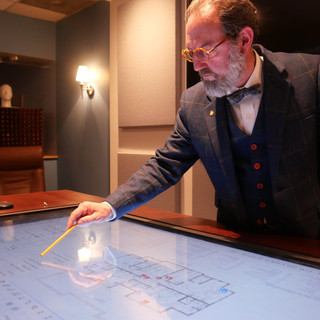
Floor plans, reflected ceiling coordination, riser diagrams, rack elevations, device locations, equipment schedules, system specifications and construction documents.
Budgeting & Bid Support
Technology budgets, contractor scopes, bid specifications, proposal review and bid leveling.
Construction Administration & Commissioning
Submittal review, field coordination, installation review, punch lists, testing and final system commissioning.
Design Starts With How the Building Will Be Used
Good technology design doesn't start with a product list.
It starts with questions.
How will people use the building?
What needs to happen automatically?
Where will people work, meet, entertain or collaborate?
What should be visible—and what should disappear into the architecture?
What happens when the internet goes down?
What needs to be serviceable?
What technologies are likely to change over the next 10 or 20 years?
Those answers drive the infrastructure and system design.
Products come later.
This is particularly important because technology specifications can easily become manufacturer-driven. We believe the design should determine the products—not the other way around.
Lighting Deserves the Same Attention
Lighting is one of the most important elements of a space and one of the easiest to get wrong. More fixtures don't necessarily create better lighting.
Good lighting considers architecture, task requirements, color temperature, beam angles, glare, daylight, artwork, finishes, furniture and how a space changes from daytime to evening.
We approach lighting as part of the overall technology environment, coordinating fixture design with lighting controls, automated shades and other systems.
The objective isn't simply to turn lights on and off.
It's to make the architecture look and feel the way it was intended.
Design Now—or Pay to Fix It Later
One of the most expensive phrases on a construction project is:
"We'll figure that out later."
Later often means after the drywall is installed.
Or after the ceiling is finished.
Or after the millwork arrives.
Or after someone discovers that the necessary conduit, power, ventilation or network connection isn't there.
A relatively inexpensive decision during design can become an expensive change order during construction.
Technology planning reduces those surprises.
It also gives the owner something equally important: a defined scope that competing contractors can bid against.
Instead of comparing three proposals containing three completely different solutions, the owner can evaluate contractors against a common design and performance standard.
More Than 35 Years of Designing Technology
Bri-Tech has spent more than three decades designing, building, programming and supporting sophisticated technology systems.
That experience changes how we approach design.
We don't just know how something looks on a drawing. We understand what happens when it gets built, programmed, commissioned, serviced and eventually upgraded.
That feedback from the field is invaluable.
Our designers can work directly for the owner or as part of the architect's, engineer's or construction manager's design team.
And while Bri-Tech has the capability to build many of the systems we design, our professional design services can also be provided independently of installation.
Don't Leave Technology to Chance.
If you're designing a custom residence, corporate facility, industrial building or other technology-intensive space, bring technology into the conversation early.
Design the architecture. Design the mechanical systems. Design the electrical systems. Design the lighting. And design the technology.
Planning a Project?
Bring Bri-Tech into the design process before construction begins.
We can help develop the technology program, establish a preliminary budget and determine the level of design documentation your project requires. Lets have a conversation.
Technology planned before construction. Not figured out afterward.