Do You Know What Modern Parking Lot Security Cameras Are Now Capable Of?

Parking lot camera technology has changed dramatically in just the last few years. Cameras can now read a license plate at the far end of a lot, capture a clear face in near-total darkness, and hold sharp detail through headlight glare and heavy weather. These are capabilities that simply didn't exist at an accessible price point a short while ago. But here's what most property owners don't realize: that technology only delivers when it's matched to your specific site and engineered correctly.
Parking areas remain one of the most demanding environments in all of physical security, with wide-open distances, brutal weather, extreme lighting swings from noon glare to pitch-black corners, and cable runs that can stretch hundreds of feet from the nearest equipment room. The newest cameras are remarkable, but the real advantage comes from pairing that technology with genuine design and careful product selection. Here are five technical considerations that make the difference.
1. Distance and Light: What Today's Cameras Can Overcome
A parking lot is essentially a large, uncontrolled canvas. You need to identify a face at the entrance, read a license plate at the far row, and capture detail in a shadowed corner, often all from different mounting points. Modern sensors, lenses, and low-light technology can handle each of these challenges impressively, but only when the right camera is matched to each specific sightline. Getting license-plate capture right, for example, requires deliberate calculation of angle, distance, shutter behavior, and dedicated LPR optics. It is never a matter of pointing a general-purpose camera at a lane and hoping. This is exactly why careful product selection matters: the "same" camera spec on paper can perform completely differently in a real lot at 2 a.m.
2. Powering and Connecting Cameras Across Long Runs
Standard copper Ethernet tops out around 300 feet, and most parking areas blow past that quickly. This is where fiber optic infrastructure and fusion splicing become essential. Fiber carries data reliably over long distances, resists electrical interference from nearby equipment and vehicles, and future-proofs the system for higher-resolution cameras down the road. But fiber only performs when it's terminated correctly. Fusion splicing produces low-loss, permanent connections that survive weather and time, where cheap mechanical connectors introduce signal loss and failure points. Bri-Tech performs its own fiber and fusion splicing in-house, so the backbone of your system is built to a single, accountable standard rather than subcontracted out to whoever's cheapest that week.

3. Building on Purpose-Built Infrastructure
Cameras are only as reliable as the infrastructure behind them: the poles, enclosures, cabling pathways, power, and network backbone. Bri-Tech's Netray Camera Infrastructure is the framework that ties all of this together into a cohesive, maintainable system rather than a patchwork of disconnected devices. Purpose-built infrastructure means cameras stay online, power is clean and protected, weather sealing actually holds, and adding or upgrading cameras later doesn't require tearing the whole thing apart. It's the unglamorous layer that determines whether your system is still working flawlessly three years from now.

4. Designing the System Before Anything Gets Installed
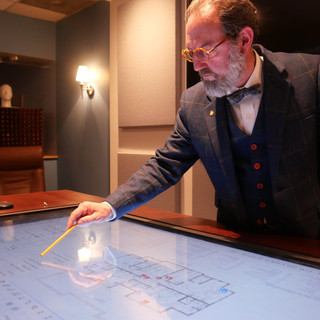
Good coverage isn't guessed. It's designed. Using professional design tools, every camera's field of view, mounting height, focal length, and overlap can be modeled against your actual site plan before a single mount goes up. This eliminates blind spots, prevents the costly surprise of a camera that can't see what it was bought to see, and ensures you're not over-buying cameras you don't need or under-covering the areas that matter. Real design turns a security system from a hopeful purchase into a predictable outcome.
5. Getting the Right Product, Not Just an Available One
Because Bri-Tech maintains direct relationships with camera manufacturers, product selection is driven by what actually fits your application, not by whatever a distributor happens to have on the shelf. Direct manufacturer relationships mean access to the right sensors for the right sightlines, faster support when something needs attention, better warranty backing, and honest guidance on where a premium camera is worth it versus where it isn't. That's a meaningfully different experience than a reseller pushing a single line of gear.

The Standard Behind It All
What ties these five together is that Bri-Tech handles them under one roof and to one standard: from the Netray infrastructure and in-house fiber and fusion splicing, to the design modeling, to direct manufacturer sourcing, all backed by Bri-Tech's own call center for monitoring and support. There's no finger-pointing between vendors when every layer is engineered and stood behind by the same team.
Ready to see what today's technology can do for your property?
If your parking area matters to the safety of your customers, staff, or tenants, it's worth having it evaluated by people who design these systems for a living. Bri-Tech offers a free camera system evaluation, a real look at your site, your risk points, and what modern coverage would take.
📞 Call Bri-Tech at 631-563-8000 to schedule your free evaluation, or visit bri-tech.com to get started.